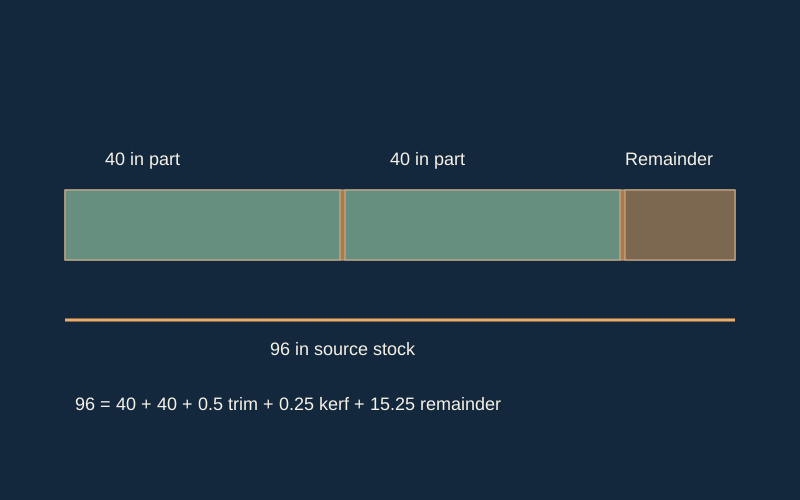
- Worked example: two 40-inch parts from 96-inch stock.
- After 0.5 inch total trim and 0.25 inch total kerf, 15.25 inches remain.
- Bars emphasize the parts; narrow cut losses are enlarged for visibility. Reuse depends on clear length and condition.
Define the finished requirement
A net-parts list describes the pieces required by the design before converting them into an order. Give each part a label, quantity, length, and material or cross-section reference. Keep different grades, profiles, or appearance requirements separate even when lengths match. State whether any fabrication allowance is included in the entered part length so it is not added twice later.
Label the dimensional basis
Record nominal descriptions and actual dimensions in distinct fields or clearly labeled notes. Use the appropriate actual geometry for physical calculations and preserve the supplier's product description for identification. NIST PS 20 provides softwood dimensional and tally conventions, but its scope should not be stretched into a universal size table for hardwood or specialty products. Confirm the dimensions of the product actually being purchased.
Build the purchase list from available lengths
Total net footage is a useful summary but does not prove that the required pieces fit the available stock. Identify candidate stock lengths and the cutting allowances used, then review the resulting patterns by material group. A proposed substitution needs another fit check. Equal total footage can still provide the wrong distribution of usable lengths for the parts on the list.
- Keep net parts and stock boards in separate records.
- State units beside lengths and totals.
- Record kerf, trim, and spare stock independently.
- Confirm the supplier's tally basis before comparing quantities.
Preserve traceability through revisions
When a source dimension changes, identify the affected part and regenerate the relevant purchase quantities. Review the full pattern as well as the changed row because other pieces may move between stock boards. Retain a dated export of the reviewed record. Autosaving a working project preserves edits, while an exported review copy helps identify exactly which version was used for a purchasing conversation.
Hypothetical equal footage, different fit
A list requires four 40-inch parts, totaling 160 inches before cutting allowances. Two hypothetical 80-inch boards also total 160 inches, but this equality leaves no room for positive kerf or trim when cutting two parts from each. The estimator reviews a suitable stock arrangement rather than treating the footage match as a complete purchase plan. These dimensions illustrate arithmetic, not a stock recommendation.
Common questions
Can I order directly from total linear footage?
Only after checking that the actual stock lengths and allowances supply the required parts. Footage alone does not establish fit.
Does nominal size belong in the record?
Yes, where it identifies the product, but label it separately from actual geometry and any tally convention.
Evidence & limits
Reviewed September 13, 2026. Sources support their stated technical principles; this site's workflows and hypothetical examples are not product tests, supplier approvals or independently reviewed project records.