Work through a complete example
These scenarios demonstrate methods. The numbers and scenes are illustrative, not documented customer projects, current prices or verified material results.
Worked planning example
Hypothetical project: four 40-inch rails and six 24-inch rails need 304 inches of finished parts. That number alone does not establish the purchase quantity. A stock-specific cut plan must also reserve kerf and end trim and show where each rail fits.
Read the method: Start a material takeoffWorked planning example
Suppose a project uses four visible rails and two concealed braces, all 36 inches long. If the rails require a better appearance grade, they are not six interchangeable parts. Run the rail and brace lists separately and identify both stock specifications in the purchase record.
Read the method: Write a parts list that can be checkedWorked planning example
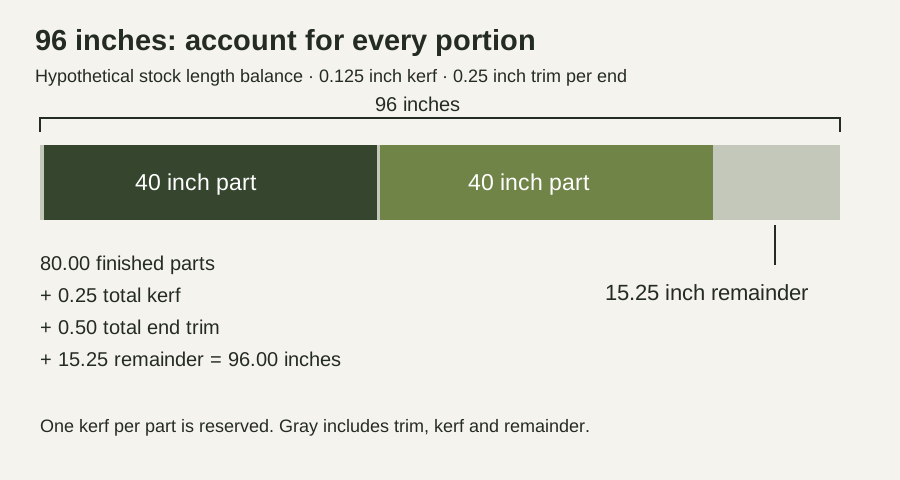
With 96-inch stock, 0.25-inch trim at each end and 0.125-inch kerf, two 40-inch parts consume 80.25 inches of the 95.5-inch usable length. The remaining 15.25 inches is not another 16-inch part. Both trim and kerf have already been deducted.
Read the method: Account for kerf and end trim