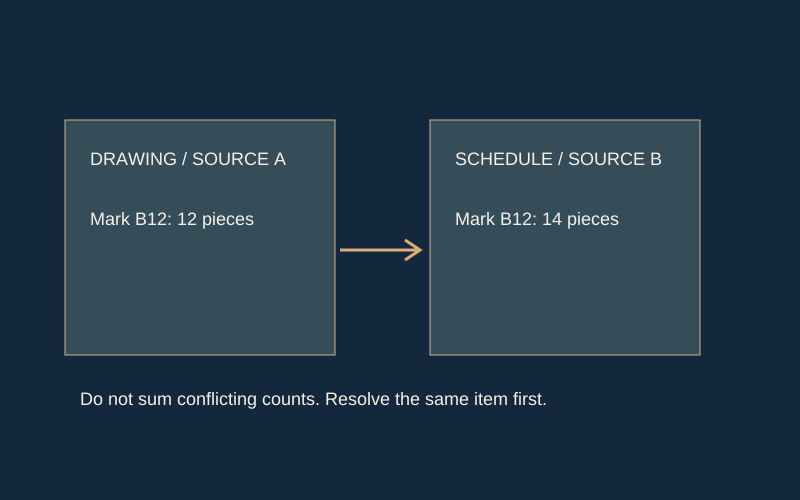
- Hypothetical source A lists 12 pieces and source B lists 14 for the same mark.
- Do not merge the two into 26; retain both references and resolve the discrepancy.
- Source revision, scope and reviewer decision belong with the quantity record.
Begin with a defined scope
A takeoff translates a documented design into quantities. It cannot supply the missing design. Identify the drawing revision, scope boundary and person responsible for unresolved dimensions before counting. A beautiful spreadsheet with the wrong revision is still the wrong order. For a small project, a dated sketch and a clear set of measured parts can be enough to start the quantity exercise.
- List the assemblies included and excluded.
- Use one part label for each unique material, cross-section and finished length.
- Mark dimensions that still require site confirmation.
Keep parts and purchases separate
The finished-parts list describes what must exist after cutting. The purchase list describes stock lengths, quantities and purchasing specifications. Moving directly from total linear footage to a board count loses the relationship between part lengths and usable stock. Preserve both lists so the installer and supplier can check different questions.
Close the loop before ordering
Review the cut schedule against actual available lengths. Confirm grade, treatment or finish requirements, actual dimensions and any matching constraints. Record allowances individually instead of burying every uncertainty in one waste percentage. The calculator can assign lengths to stock; it cannot decide whether a board face is acceptable for your project.
Worked planning example
Hypothetical project: four 40-inch rails and six 24-inch rails need 304 inches of finished parts. That number alone does not establish the purchase quantity. A stock-specific cut plan must also reserve kerf and end trim and show where each rail fits.
Common questions
Is a takeoff the same as an estimate?
A takeoff records quantities. An estimate adds prices, labor, logistics and other costs. Keep the quantity basis visible even when the two documents are combined.
Can I start before every dimension is known?
Yes, but identify provisional dimensions and do not treat the output as an approved order. A later dimension change can alter the cutting pattern.
Evidence & limits
- Calculation method: dimensional arithmetic and conservative first-fit packing
- NIST PS 20-25 — measurement, tally and softwood size basis
Reviewed September 13, 2026. Sources support their stated technical principles; this site's workflows and hypothetical examples are not product tests, supplier approvals or independently reviewed project records.