Tools & working records
Use your own inputs. Inspect assumptions. Export the result.
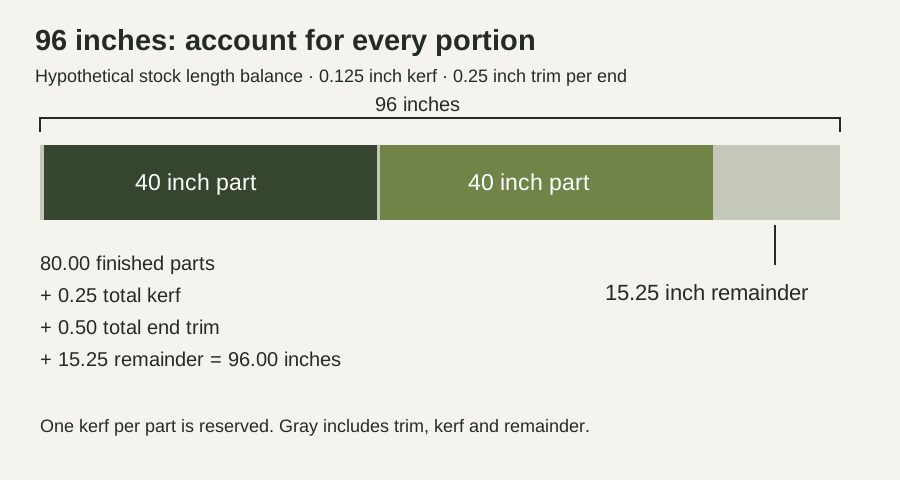
Assign finished parts to stock with explicit kerf and end trim.
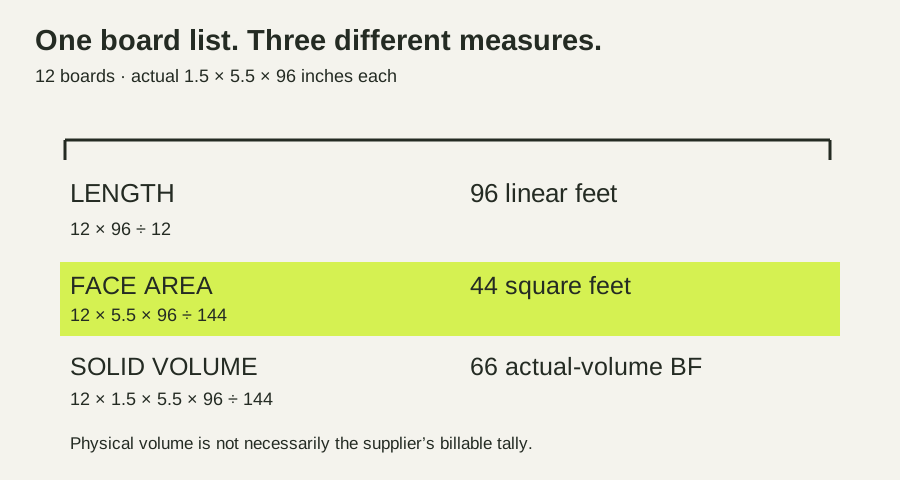
Working toolLumber quantity worksheetCompute linear footage, face area and actual physical volume.
Understand the method
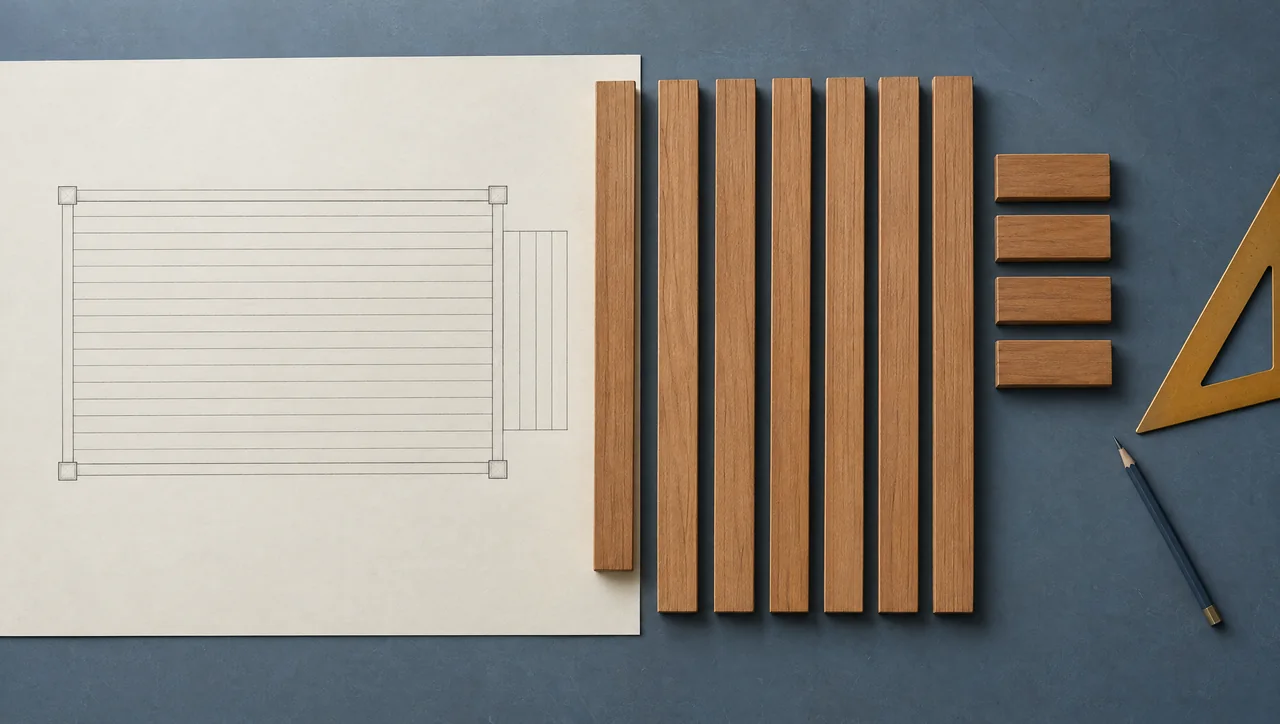 How to start a material takeoff from plans
Separate the things you must build from the stock you must buy.
02 / Estimating practiceWrite a parts list that can be checkedUse unique labels and measured dimensions to make every piece traceable.
03 / Estimating practice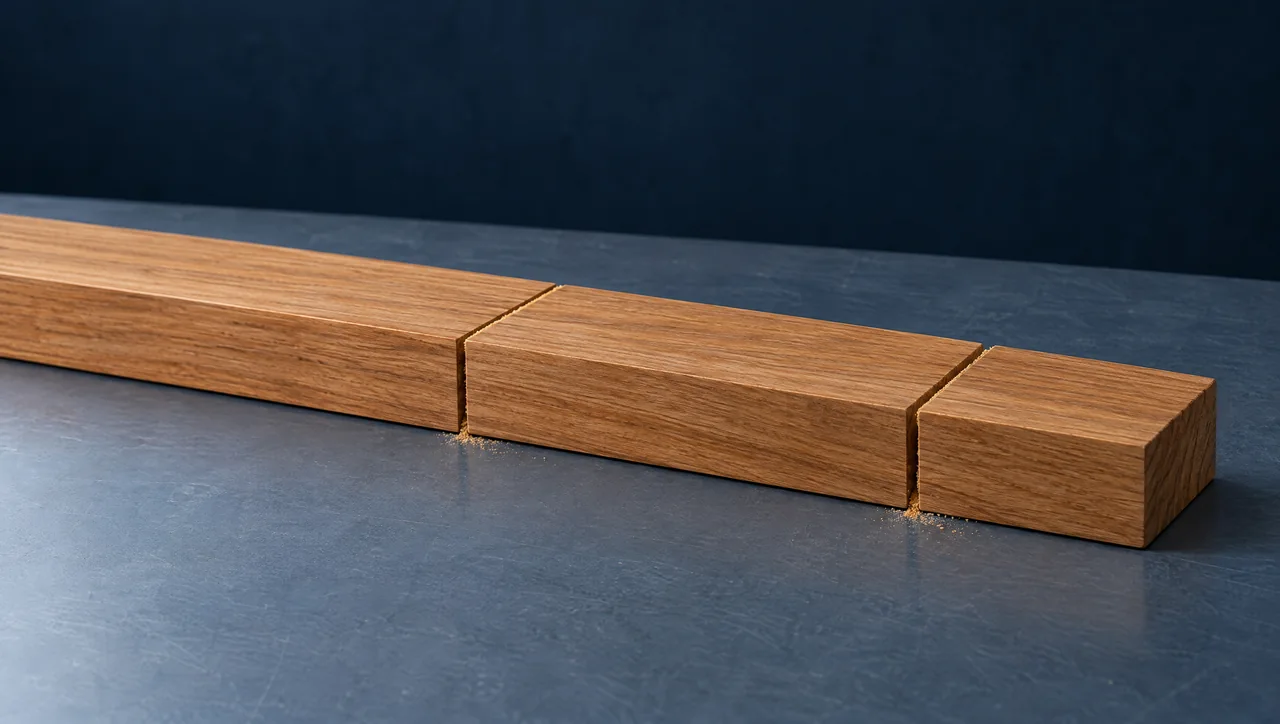 Account for kerf and end trim
Small losses change whether a cutting pattern physically fits.
Use quantities and stock planning for different decisions
Begin with a source-backed list of required parts or measured areas. Then decide how those requirements translate into purchasable stock. Keeping these stages separate makes it possible to explain a quantity change without hiding it inside a waste allowance.
Establish the net requirement
Retain drawing references, units, dimensions, counts and unresolved source conflicts. Do not combine repeated views as additional material without checking their scope. Separate unlike materials and profiles before calculating totals.
Review the purchase conversion
For cut planning, state the available stock lengths, kerf and end-trim assumptions. For coverage, use the appropriate installed coverage basis. Keep offcuts, contingency and supplier package rounding identifiable so another reviewer can reconstruct the order.
Example: count unchanged, stock plan changed
A documented revision changes the required length of twelve parts but leaves the count at twelve. The parts total may look unchanged, while the available stock lengths and cut pattern require a different purchase. Recheck the dependent stock plan rather than updating only the count.