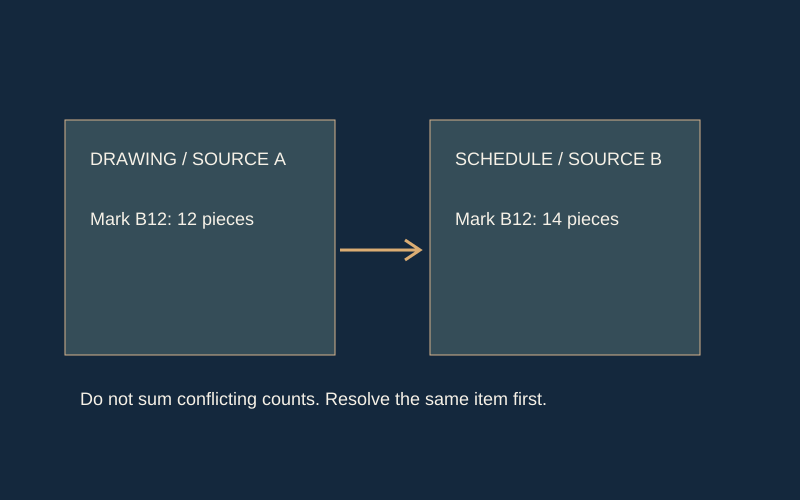
- Hypothetical source A lists 12 pieces and source B lists 14 for the same mark.
- Do not merge the two into 26; retain both references and resolve the discrepancy.
- Source revision, scope and reviewer decision belong with the quantity record.
Identify the conflict precisely
Record the item, each source reference, the revision shown, and the values that disagree. A plan count, a schedule row, and a detail can describe different aspects of the same component. Do not decide that the most convenient value wins. First establish whether the sources concern the same scope and whether one explicitly supersedes another. This is an editorial review workflow, not a contractual rule of document precedence.
Separate repetition from additional scope
A component may appear in more than one view without representing additional pieces. Compare labels, location, and surrounding context before combining extracted rows. Conversely, similar labels can describe repeated assemblies that really do add quantity. Keep the reasoning in the line notes or your review record. Matching text alone is not enough to prove either duplication or an additional requirement.
Retain uncertainty until there is a basis to resolve it
If the current documents do not answer the question, flag the affected quantity and obtain clarification from the responsible project source. Preserve the competing references and the eventual response with its date. Do not replace an unreadable dimension with an AI guess. OpenAI's vision guidance identifies possible errors in small text, counting, and spatial interpretation; extraction cannot settle an unresolved design conflict.
- Check document identity before comparing revisions.
- Keep textual page and region references with the line.
- Distinguish corrected extraction from changed design.
- Record the source of the resolution, not just the new total.
Review the consequences of the resolution
Update the affected rows, then check dependent totals and stock plans. A changed length can alter purchases without changing the component count. Private projects autosave edits, but retain a dated CSV or browser-print copy of the reviewed result when sharing it. Use reviewed approval after the conflict and its consequences have been checked; the status does not create missing evidence or determine document precedence.
Hypothetical schedule and detail disagreement
A schedule lists six components while a detail is interpreted as showing eight. The reviewer records both references and checks whether the detail depicts another assembly or a superseded revision. The answer is not apparent, so the row remains unresolved until a documented clarification arrives. The corrected count and any resulting stock changes are then reviewed together before export.
Common questions
Should the newest file name automatically control?
No. Check the document's actual revision and scope, plus any applicable project direction. A file name alone does not establish authority.
Can approval be used to hide an unresolved line?
Approval should follow a documented review. Keep an unresolved quantity visible and obtain the needed clarification rather than treating status as evidence.
Evidence & limits
Reviewed September 13, 2026. Sources support their stated technical principles; this site's workflows and hypothetical examples are not product tests, supplier approvals or independently reviewed project records.