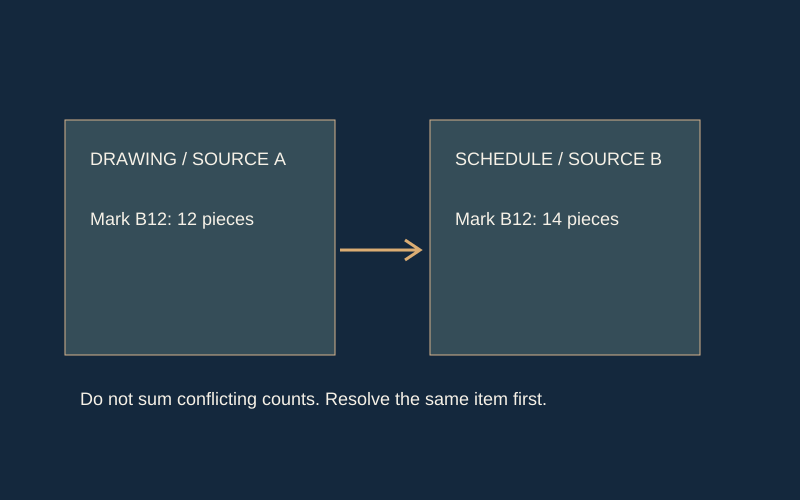
- Hypothetical source A lists 12 pieces and source B lists 14 for the same mark.
- Do not merge the two into 26; retain both references and resolve the discrepancy.
- Source revision, scope and reviewer decision belong with the quantity record.
Start with a readable, identified source
The private-project workflow accepts PDF, PNG, JPG, and CSV files with a 4 MB upload limit. Identify the document revision and scope before importing it. Retain the original document for review, particularly if you prepare a smaller extract to meet the upload limit. A fragment should still carry enough page and revision context to establish where its quantities came from.
Choose the available entry path
CSV import and manual entry are available now. AI document parsing requires the AI key to be configured before that path can run. Uploading a drawing does not, by itself, mean its quantities have been extracted. Until parsing is available, enter source-backed rows manually or import a prepared CSV, then apply the same review process to those lines.
Check every proposed line
Use the line evidence labels and textual page or region references to return to the source. These references support review; they are not exact visual highlights on the drawing. Confirm the item identity, quantity, unit, and dimensional basis. OpenAI's official vision guidance notes limitations involving small text, spatial interpretation, and counting, so an AI-produced line remains a proposal until someone checks it.
- Check whether repeated views describe the same item.
- Keep missing dimensions unresolved rather than guessed.
- Distinguish a printed count from a calculated quantity.
- Correct source references that point to the wrong revision.
Approve the reviewed record and retain an export
Projects autosave working changes. After checking the lines and resolving open issues, use reviewed approval to record the workflow decision. That status is a user review, not a claim that the software certified the design. Export CSV or use browser print for a dated handoff copy. Keep the source revision with that copy so an autosaved later edit does not obscure which quantities were shared.
Hypothetical duplicated detail
A PDF shows the same component in a plan and an enlarged detail. A draft takeoff contains a line for each appearance. The reviewer follows the textual references, establishes that both describe one component, and corrects the duplicate before approval. If AI parsing is not configured, the same issue can be checked in manually entered or CSV-imported rows.
Common questions
Can I use the project before AI parsing is configured?
Yes. Manual entry and CSV import are available, followed by line review, reviewed approval, and export.
Does a page reference prove the extracted number is correct?
No. It helps locate the evidence. The reviewer still needs to check the source, interpretation, units, and revision.
Evidence & limits
Reviewed September 13, 2026. Sources support their stated technical principles; this site's workflows and hypothetical examples are not product tests, supplier approvals or independently reviewed project records.