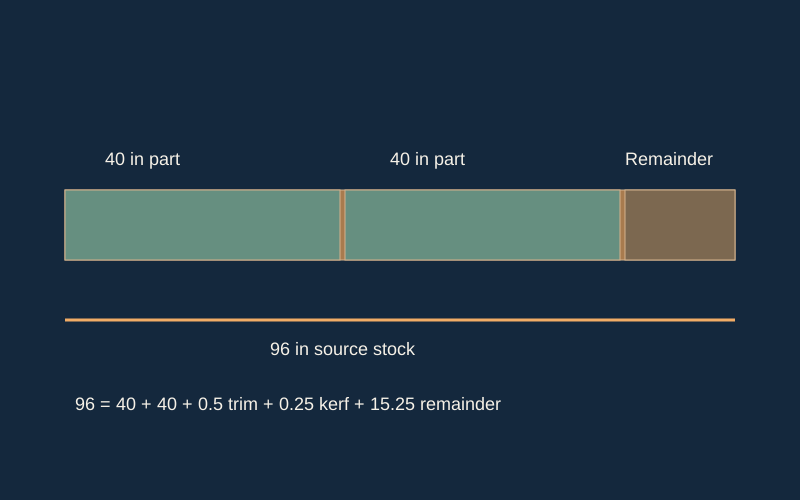
- Worked example: two 40-inch parts from 96-inch stock.
- After 0.5 inch total trim and 0.25 inch total kerf, 15.25 inches remain.
- Bars emphasize the parts; narrow cut losses are enlarged for visibility. Reuse depends on clear length and condition.
Label what actually remains
Record material, cross-section, usable length and condition after cutting. A theoretical remainder from a plan is provisional until the work is complete. Ends may need additional trimming or a defect may reduce the clear length. Keep the physical piece and its label together so the next person does not have to rediscover its limitations.
Assign rather than assume reuse
Match an offcut to a specific future part. Check the full part length plus the cutting allowance again; a piece barely longer than the finished part may still be inadequate. Keep different species, grades and finishes separated even when their dimensions match. Reuse is a design and quality decision as well as a length calculation.
- Give each reusable offcut an ID.
- Record actual clear length after end inspection.
- Remove it from the available list when assigned.
Keep the schedule honest
The current cut planner starts from equal-length new stock. It does not manage a live offcut inventory. You can plan an offcut as a separate stock run and remove the satisfied parts from the main list, but preserve a written reconciliation so the same part or offcut is not counted twice.
Worked planning example
The kerf example leaves a theoretical 15.25-inch remainder. If an end defect requires another 0.75 inch of removal, only 14.5 inches remain before considering a new cut. A nominal “15-inch offcut” label would overstate the usable material.
Common questions
Does gray in the diagram mean reusable wood?
No. Gray includes losses and remainder; the numeric schedule separates them. Physical inspection decides what can be reused.
Can the tool optimize an offcut bin?
Not automatically. It supports a single stock length per run, with a bounded parts list.
Evidence & limits
- Calculation method: dimensional arithmetic and conservative first-fit packing
- NIST PS 20-25 — measurement, tally and softwood size basis
Reviewed September 13, 2026. Sources support their stated technical principles; this site's workflows and hypothetical examples are not product tests, supplier approvals or independently reviewed project records.