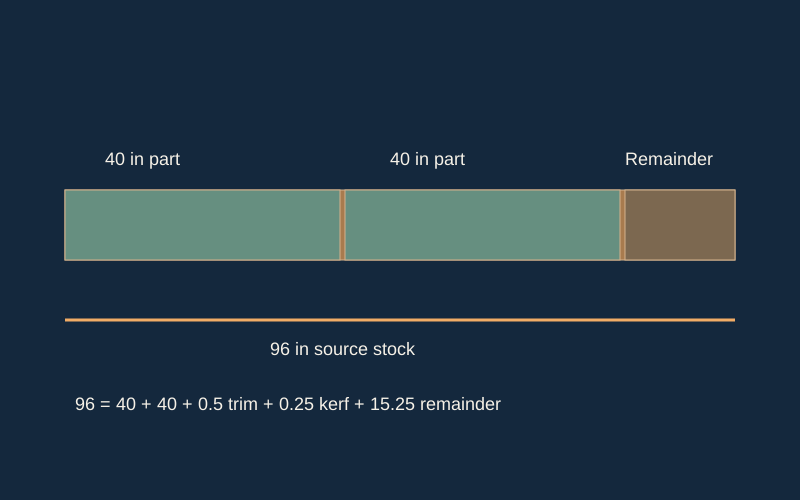
- Worked example: two 40-inch parts from 96-inch stock.
- After 0.5 inch total trim and 0.25 inch total kerf, 15.25 inches remain.
- Bars emphasize the parts; narrow cut losses are enlarged for visibility. Reuse depends on clear length and condition.
Account for known losses first
Kerf and end trim are explicit losses in the cutting plan. Adding a blanket percentage to the resulting board count can count those losses twice. Distinguish known cutting deductions from defect allowance, selection for appearance, site damage and contingency for uncertain dimensions. Each has a different cause and may need a different response.
Remainder is not automatically waste
An offcut may serve a later part if its material, length and quality are suitable. It may also be too short or unsuitable. The tool reports unallocated remainder rather than claiming it is reusable. To count an offcut against another need, record its actual usable dimensions and the part assigned to it.
- Show cut kerf and end trim separately.
- List deliberate spare stock as a purchase decision.
- State whether offcuts have an identified use.
Explain the allowance to the buyer
There is no universal safe waste percentage for every lumber project. A field-measured rectangular run and a highly selected appearance assembly can have different uncertainties. Write down what the allowance is intended to cover. If the dimensions are uncertain enough to change the layout, remeasure instead of trying to hide the uncertainty in a percentage.
Worked planning example
A plan requires five stock boards and produces two long offcuts. Buying a sixth board as a project spare is a separate decision. Label it “one spare board” rather than describing the entire sixth board as saw waste or pretending the two offcuts will certainly be reused.
Common questions
Does the calculator add 10% automatically?
No. Known geometric losses are explicit. Any contingency is an additional documented purchase decision.
Can a zero-remainder plan still need extra stock?
Yes. The length model does not inspect defects, appearance selection, transport damage or fabrication mistakes.
Evidence & limits
- Calculation method: dimensional arithmetic and conservative first-fit packing
- NIST PS 20-25 — measurement, tally and softwood size basis
Reviewed September 13, 2026. Sources support their stated technical principles; this site's workflows and hypothetical examples are not product tests, supplier approvals or independently reviewed project records.